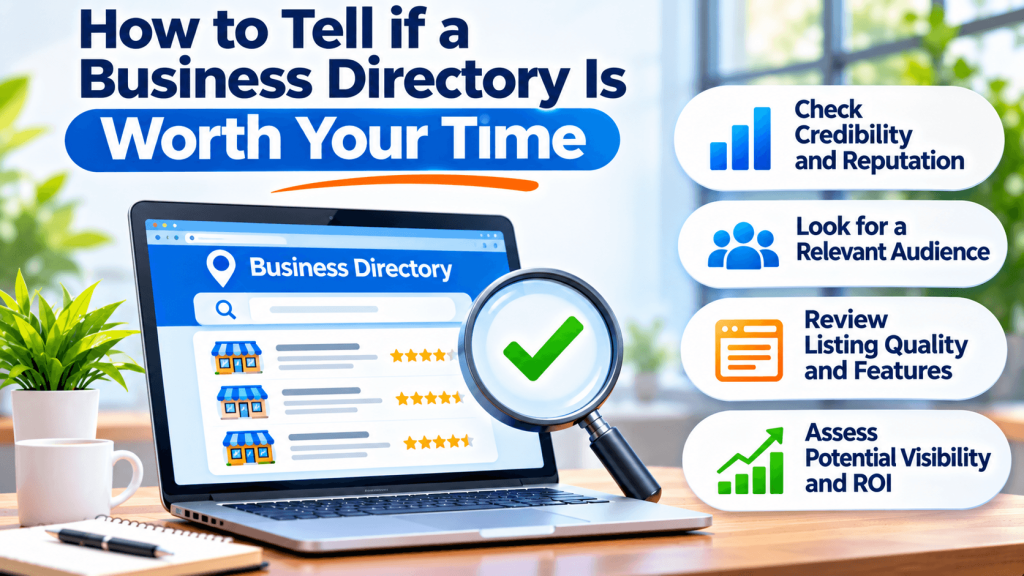
A new marketing agency owner in Denver gets an email offering “500 directory submissions for $49.” It sounds efficient. It also raises a fair question: which directories actually help a small business, and which are just noise?
What a Good Business Directory Looks Like
A worthwhile directory is built for people first. Its categories make sense, its listings show real contact details, and its pages load cleanly without endless pop-up ads. If you would not use it to find a business yourself, a customer probably will not either.
Look for signs of maintenance. Are listings organized by clear categories? Are there obvious spam entries or broken pages? Does the site have a privacy policy and a way to contact the people who run it? These basics say more than any claimed authority score.
Relevance Matters More Than Volume
Bulk submission packages often place businesses on low-quality or abandoned sites. At best, those listings do nothing. At worst, they spread inconsistent details that you will later need to clean up.
A smaller set of relevant listings is usually more useful. That might include major platforms like Google Business Profile, Bing Places, and Yelp, a few industry-specific sites, local chamber or association directories, and well-organized general directories such as MasterWebDirectory.
Think about where your customers already look. A wedding photographer may get more value from regional wedding directories, while a B2B consultant might focus on professional associations. The right mix depends on your industry, your location, and how people in your market search for help.
A Quick Checklist Before You List
Before submitting, check whether the directory has a category that fits your business. A marketing agency, for example, belongs in a section like the Advertising and Marketing category on a general directory, where potential clients browsing for marketing help can find it.
Next, confirm you can control and edit your listing later. Avoid sites that lock details or charge to correct mistakes. Write a unique description rather than pasting the same paragraph everywhere, and use the exact business name, address, and phone number from your website.
Finally, keep a simple record of every directory you join, including login details and the date you last reviewed it. That record makes future updates far easier when your phone number or address changes.
Conclusion
Choosing directories is about quality, relevance, and control rather than raw numbers. Pick legitimate platforms that real customers use, keep your details consistent, and review them regularly. A well-chosen MasterWebDirectory listing can be one practical piece of that broader, carefully maintained presence.
Frequently Asked Questions
Are paid directory listings better than free ones?
Not automatically. Some paid listings offer useful features, like extra visibility within a directory or richer profiles, but price alone does not indicate quality. Judge any directory by its relevance, organization, and real audience. A well-maintained free listing on a relevant site can be more useful than an expensive one on a weak site.
Can listing on low-quality directories hurt my business?
It can create problems. Spammy directories may publish incorrect details or associate your business with questionable sites, and cleaning up scattered listings takes time. Google’s spam policies also discourage manipulative link schemes. Focusing on legitimate, relevant directories avoids these issues and keeps your information easier to manage.
How many business directories should a small business join?
There is no magic number. Most small businesses benefit from the major platforms, a handful of industry or local directories, and a few quality general directories. Choose based on relevance and how well you can maintain each listing, rather than trying to reach a specific count.
Do directory listings still matter now that most people use Google?
They still play a role. Directories help customers verify your details, may send referral visitors, and contribute to consistent citations across the web. They are not a replacement for a strong website or Google Business Profile, but they support a broader local marketing strategy.